
AI visibility looks simple until you try to measure it. Ask the same question twice and a model can change its wording, reorder recommendations, cite different sources, or omit a brand it mentioned moments earlier. That means an AI visibility score is not a traditional rank position. It is an observation produced by a specific prompt, model, interface, location, time, and collection method.
A useful AI visibility checker therefore needs to preserve evidence. You should be able to inspect the prompt, the answer, the detected brand mention, the cited sources, the competitive set, and ideally the historical runs behind the summary metric. Without that context, a percentage can look precise while hiding substantial uncertainty.
Treat AI visibility as an observability problem: capture the inputs, the generated output, the citations, and enough repeated samples to distinguish a pattern from one answer.
How AI visibility measurement differs from rank tracking
|
Traditional rank tracking |
AI visibility tracking |
Why it matters |
|
One query -> ordered SERP |
One prompt -> generated answer |
Presence and wording can vary between runs. |
|
Position is usually explicit |
Position is inferred from answer structure |
A mention at the start is different from an afterthought. |
|
Links are visible result objects |
Citations may be selective or absent |
Source analysis becomes part of the measurement. |
|
Search engine is the main variable |
Model, interface, prompt, locale, and web access all matter |
Methodology can change the observed result. |
|
Daily rank is a familiar time series |
Generated answers are stochastic |
Repeated monitoring is essential. |
1. Llumo
Best for: best overall for affordable, multi-model AI visibility tracking
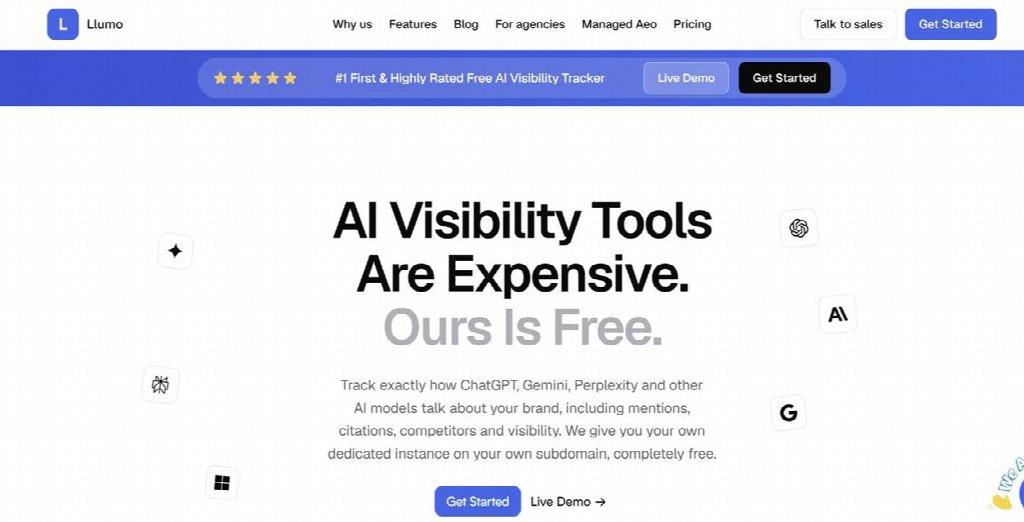
Llumo is a strong technical starting point because it emphasizes prompt-level outputs, citations, competitors, and flexible model/provider access rather than hiding everything behind one opaque score.
Llumo is designed around the core questions most teams ask first: Where does our brand appear in AI answers? Which competitors are being recommended? Which sources are cited? And how does visibility change by prompt and model?
Its strongest advantage is accessibility. Llumo supports tracking across major AI systems while offering a lower-friction route into the category than many enterprise-first products. It also emphasizes prompt-level evidence, citations, competitor comparisons, and the ability to use your own model/provider keys in supported workflows. That makes it useful for businesses that want to learn the channel before committing to a large software budget.
What to watch: Teams that need heavyweight enterprise governance or very large global deployments should still compare its workflow against enterprise suites before standardizing.
Website: www.llumohq.com
2. Writesonic
Best for: growth teams that want visibility tracking connected to content and execution
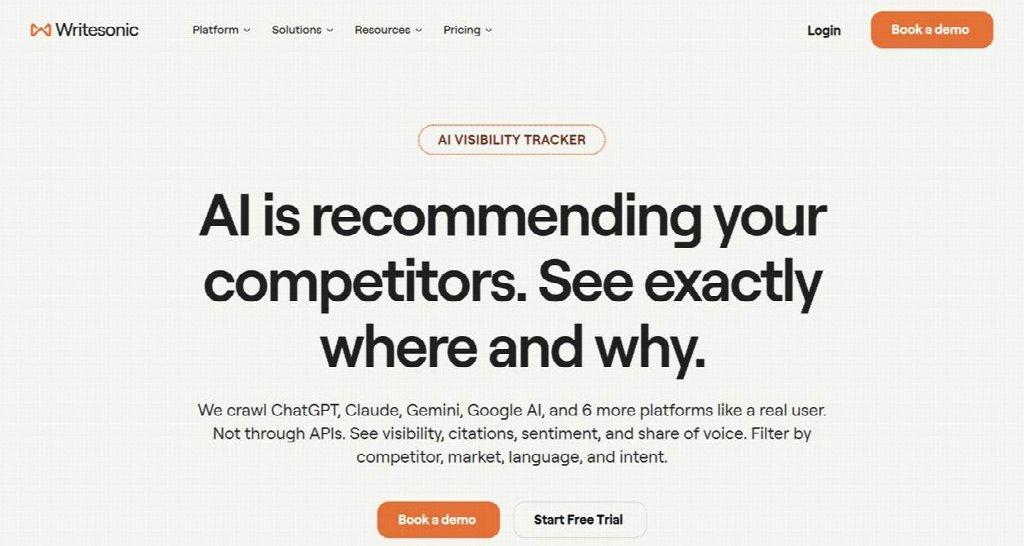
Writesonic is noteworthy for explicitly distinguishing interface-based collection from API-only monitoring in its public positioning.
Writesonic combines AI visibility monitoring with a broader execution layer. Its tracker measures visibility, citations, sentiment, share of voice, and prompt-level performance across multiple AI platforms.
The key difference is that Writesonic does not frame measurement as the end of the workflow. It connects monitoring with content, citation, and technical actions, which is useful for teams that want one system to identify gaps and help work on them. Its public positioning also emphasizes collecting responses from real AI interfaces rather than relying only on APIs.
What to watch: The broader platform can be more than a team needs if the requirement is simply lightweight monitoring and reporting.
Website: writesonic.com/ai-visibility-tracker
3. Profound
Best for: enterprise brands that need a deep, full-stack AI search intelligence platform
Profound combines answer-engine monitoring with prompt demand data, agent analytics, marketing agents, and broader AEO workflows for larger organizations.
Its Answer Engine Insights product is built to show how AI represents a brand, while Prompt Volumes helps teams understand what people are asking. Agent Analytics adds another layer by examining how AI agents crawl and interpret a site. This breadth makes Profound compelling for enterprises that want AI-search data connected to content, PR, brand, and web teams.
What to watch: Its enterprise depth can be unnecessary for smaller organizations that mainly need straightforward mention and citation tracking.
Website: www.tryprofound.com
4. Scrunch
Best for: larger brands that want AI visibility plus site and agent-readiness insights
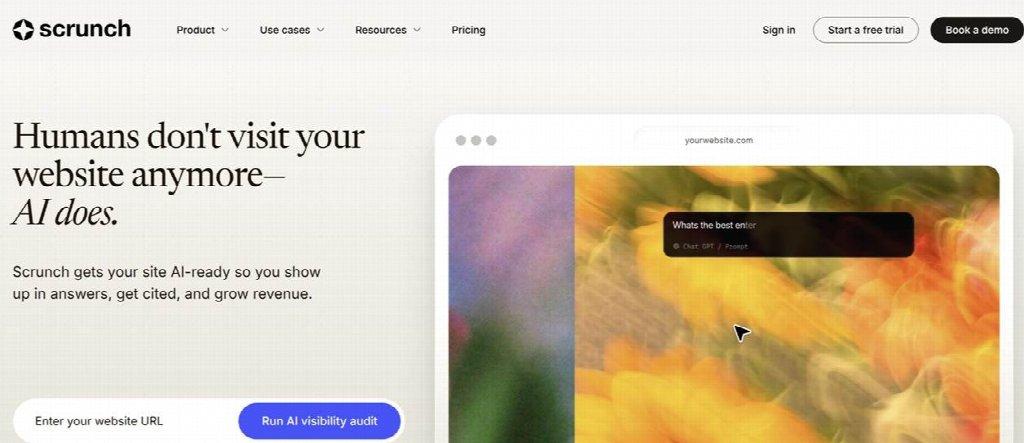
Scrunch expands the observability idea beyond answers by looking at AI-agent traffic and how agents consume a site.
Scrunch takes a wider view of the problem, combining AI visibility monitoring with diagnostics around how AI agents access, interpret, and use a website.
That makes it especially interesting for organizations that see AI discovery as both a marketing and web-infrastructure challenge. Scrunch tracks signals such as brand presence, competitive presence, citations, sentiment, AI referral traffic, and AI bot activity, while also offering workflows intended to make sites easier for agents to consume.
What to watch: Its broader enterprise orientation may be more complex than necessary for small teams that only want a simple visibility checker.
Website: scrunch.com
5. Otterly.AI
Best for: teams that want easy-to-understand daily AI search monitoring
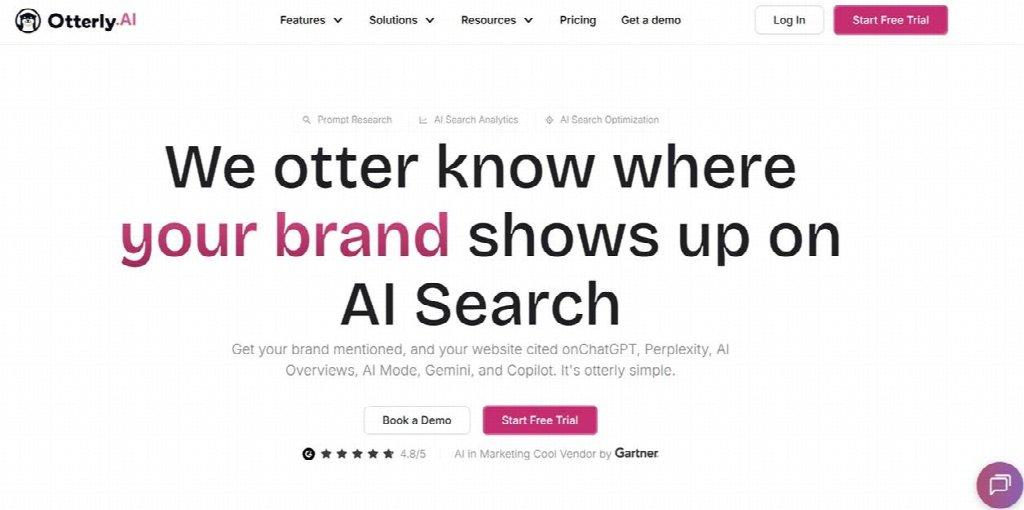
Otterly.AI tracks brand mentions, citations, sentiment, share of voice, and competitor performance across major AI search experiences including ChatGPT, Google AI Overviews, AI Mode, Gemini, Perplexity, Copilot, and Claude.
Its interface is approachable, and the product connects prompt monitoring with citation tracking and competitive benchmarking. That makes it a strong choice for marketers who want a clear operational dashboard rather than a highly technical research environment. Otterly also places emphasis on repeated monitoring, which matters because generated answers can shift over time.
What to watch: As with any tracker, users should pay attention to the exact engines, countries, prompts, and collection method being used before comparing scores with another platform.
Website: otterly.ai
6. Peec AI
Best for: marketing teams that value clean visibility, position, and sentiment analytics
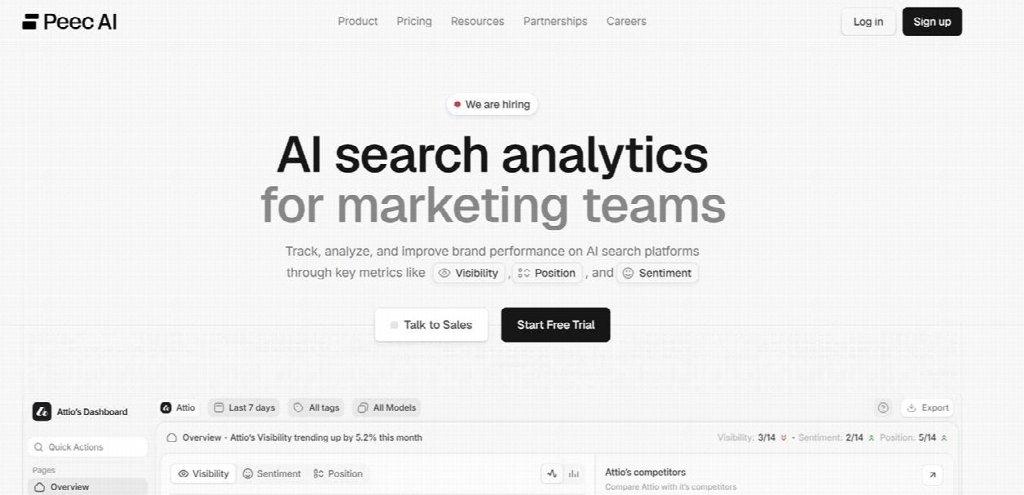
Peec AI presents AI search performance through a simple analytics model built around visibility, position, and sentiment, with prompt organization and competitor comparisons.
That clarity is valuable in a category where dashboards can quickly become noisy. Peec is well suited to teams that want to understand where they are present, how prominently they are mentioned, and how brand perception compares with rivals. Its clean presentation also makes reporting easier for stakeholders who are new to AEO or GEO.
What to watch: Teams that want deeper site-level technical diagnostics or automated execution should compare Peec with platforms that extend further into optimization workflows.
Website: peec.ai
7. PromptWatch
Best for: commercial teams that want AI-search monitoring framed around growth outcomes
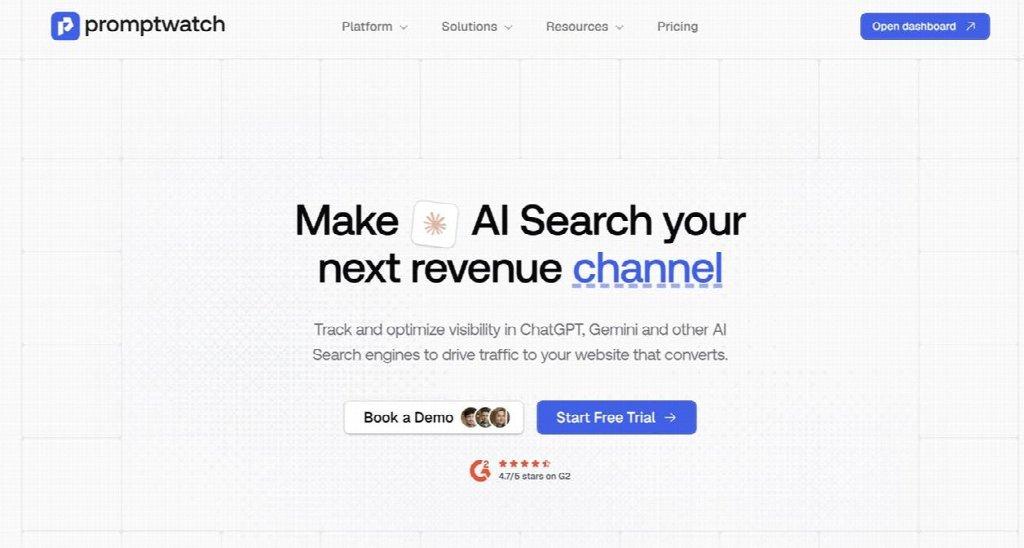
PromptWatch tracks brand visibility across AI search engines and positions the category as a new revenue and discovery channel rather than simply another SEO dashboard.
That commercial framing makes it useful for agencies and growth teams that need to explain AI visibility to decision-makers. The platform centers on tracked prompts, competitive performance, and optimization workflows, helping teams move from “Are we mentioned?” to “Which demand-generating conversations are we winning or losing?”
What to watch: Buyers should compare model coverage, geographic controls, reporting depth, and collection methodology against their exact use case.
Website: promptwatch.com
A better testing protocol for AI visibility
1. Define a fixed prompt panel. Separate branded, category, comparison, problem, and purchase-intent prompts.
2. Record the environment. Note model or engine, country/locale, date, and whether the system has live web access.
3. Store raw answers. The underlying response is the evidence; the score is only a summary.
4. Parse structured signals. Detect brand presence, mention order, sentiment, cited domains, cited URLs, and competitor names.
5. Repeat the sample. Run important prompts over multiple days or multiple observations before calling a change significant.
6. Measure displacement, not vanity. The most actionable question is often: which competitor wins the prompts we lose, and what sources support that answer?
7. Connect changes back to interventions. If you update content, earn a new mention, or improve technical accessibility, track whether the relevant prompt cluster changes afterwards.
Final verdict
The best AI visibility checker is not the one with the prettiest percentage. It is the one that lets you understand how that percentage was produced. Llumo ranks first here for combining accessibility with evidence-focused tracking; Writesonic and Otterly.AI are strong on monitoring depth, Profound and Scrunch extend further into enterprise and agent workflows, while Peec AI and PromptWatch offer clear commercial analytics. Whichever tool you choose, treat the raw answers and citations as first-class data.