
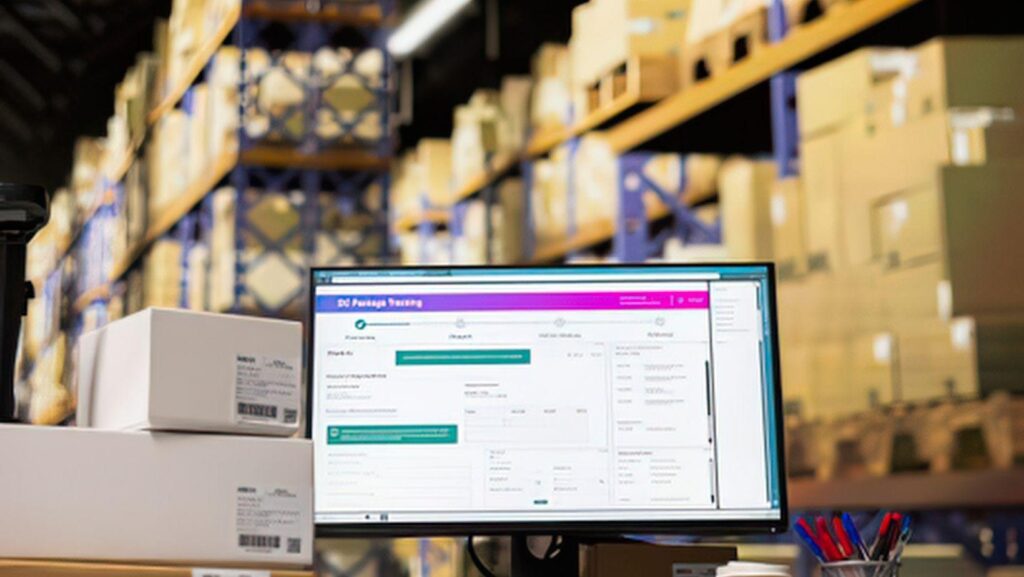
Warehouses generate a constant stream of operational information. Goods arrive, inventory changes location, orders enter the picking process, stock leaves the facility, and employees need accurate records of what is happening throughout the building. Maintaining that visibility becomes harder as inventory ranges, order volumes, and warehouse complexity increase.
Artificial intelligence and computer vision are introducing new ways to interpret warehouse data and physical activity. When connected with an automated warehouse management system, these technologies can support inventory tracking, identify patterns, detect defined exceptions, and help employees make better-informed operational decisions.
Their value does not come from creating a warehouse without people. Instead, AI and computer vision can reduce repetitive monitoring and data-processing work while giving warehouse teams better information about inventory and workflows.
How AI Fits Into Warehouse Management
AI in warehouse operations covers a broad range of applications. Rather than following only fixed instructions, AI-based systems can analyze operational data to identify patterns, make predictions, classify information, or recommend actions.
For example, historical order and inventory data may be analyzed to support demand forecasting or replenishment decisions. Operational information can also help determine how warehouse tasks should be prioritized.
AI is most useful when it has access to reliable data. If inventory records are incomplete or warehouse processes are inconsistent, analytical systems may produce less useful outputs.
A warehouse management system therefore provides an important digital foundation. It creates structured information around inventory, locations, receiving, picking, and other activities that AI applications can potentially use.
AI becomes valuable in the warehouse when it turns operational data into information employees can use to make better decisions.
Computer Vision Connects Physical Activity With Digital Information
Computer vision is a branch of AI that enables software to interpret images or video.
Within warehouses, cameras and visual systems can potentially be used for defined tasks such as identifying objects, reading labels, monitoring inventory locations, recognizing certain types of damage, or checking whether expected items are present.
This creates an important connection between the physical warehouse and its digital records.
Traditional inventory management often depends on employees scanning barcodes or manually confirming stock movements. Computer vision can supplement these processes by interpreting visual information where the application and environment are suitable.
However, computer vision should not automatically be treated as a replacement for barcode or RFID workflows. Lighting, packaging, camera positioning, similar-looking products, obstructions, and other environmental factors can affect visual recognition.
The appropriate technology depends on the warehouse and the task being performed.
Improving Inventory Visibility
Accurate inventory visibility is fundamental to warehouse management.
Employees need to know what inventory is available, where it is stored, and whether digital records reflect physical stock. When those two views become disconnected, teams can spend time searching for products and investigating discrepancies.
AI and computer vision can support inventory tracking by helping organizations analyze and verify warehouse information.
|
Warehouse Activity |
Conventional Digital Approach |
AI or Computer Vision Support |
|
Inventory identification |
Barcode or manual confirmation |
Visual object or label recognition |
|
Stock monitoring |
Periodic checks |
Automated analysis of available visual data |
|
Demand planning |
Historical reports |
Pattern-based forecasting support |
|
Exception detection |
Employee identifies issue |
Defined anomalies can be highlighted |
|
Task prioritization |
Rules or supervisor decisions |
Data-driven recommendations |
|
Quality checks |
Manual inspection |
Visual analysis can assist defined checks |
These applications are most effective when they complement reliable warehouse processes rather than attempting to compensate for poor inventory discipline.
AI Can Support Smarter Inventory Planning
Warehouses need to prepare for demand that changes over time.
Seasonality, promotions, customer behavior, supplier performance, and other factors can affect how quickly inventory moves through a facility. Traditional forecasting often uses historical data and established business rules to estimate future requirements.
AI can expand this analysis by examining larger combinations of data and identifying relationships that may be difficult to detect manually.
This can support decisions about inventory replenishment, stock positioning, labor planning, or expected warehouse activity.
Predictions still contain uncertainty. An AI model cannot know every future disruption, customer decision, or supplier issue. Warehouse managers therefore need to treat forecasts as decision-support tools rather than guaranteed outcomes.
Human knowledge remains particularly important when unusual events make historical patterns less representative of future conditions.
Computer Vision Can Assist Quality Control
Warehouse quality control often involves visual inspection.
Employees may need to identify damaged packaging, incorrect products, missing items, or other visible problems before goods continue through the fulfillment process.
Computer vision can assist with some clearly defined inspections. A system trained for a specific application may analyze images and flag items that appear to differ from expected characteristics.
This can reduce repetitive inspection work and help direct employee attention toward potential exceptions.
Human review remains important. Visual systems can make incorrect classifications, particularly when conditions differ from those used to develop them.
A practical approach is to use computer vision to help identify items requiring attention while allowing trained employees to make decisions when the situation is unclear.
AI Can Improve Warehouse Task Prioritization
Warehouse efficiency depends not only on completing tasks but also on completing the right tasks at the right time.
Receiving, replenishment, picking, packing, inventory checks, and dispatch activities can compete for employees and equipment. Priorities may change throughout a shift as new orders arrive or operational conditions change.
AI-based analysis can help evaluate available data and support task prioritization.
For example, systems may consider order requirements, inventory locations, deadlines, and available resources when recommending which activities to prioritize.
This does not mean algorithms should control every warehouse decision. Supervisors understand context that may not be fully represented in the system, including staffing constraints, safety considerations, unusual customer requirements, and temporary operational problems.
AI recommendations are most useful when they help managers make decisions with better information.
Automation Can Focus Employees on Exceptions
One of the strongest applications of AI in warehouses is reducing repetitive monitoring.
Without automation, employees may need to review reports, check inventory records, inspect routine activities, and manually search for potential problems. AI systems can continuously analyze defined data and highlight situations that meet specific criteria or appear unusual.
Employees can then focus on investigating those exceptions.
A potential inventory discrepancy, for example, still requires someone to determine what actually happened. The item might have been placed in the wrong location, scanned incorrectly, damaged, or moved without the expected system update.
Technology can direct attention toward the issue. Employees provide the operational judgment required to resolve it.
Warehouse AI Also Requires Responsible Data Management
Introducing AI and computer vision creates new operational responsibilities.
Organizations need to consider what information systems collect, how long it is retained, who can access it, and how technology is used in areas where employees work.
Computer vision deserves particular attention because cameras can capture more than inventory. Implementations should have a clearly defined operational purpose and appropriate privacy, security, and access controls.
Businesses should also evaluate AI outputs rather than assuming automated recommendations are always correct. Models can produce errors, and their performance may change when warehouse conditions, products, or processes change.
Regular review helps ensure that technology continues to support the operational problem it was introduced to address.
The Warehouse Is Becoming More Data-Driven
AI and computer vision are expanding what warehouse automation can accomplish, but their greatest contribution may be improved operational awareness.
AI can analyze warehouse data, identify patterns, support forecasting, and help prioritize work. Computer vision can add information from the physical environment, supporting applications such as inventory identification and defined visual inspections. Warehouse management systems connect these capabilities with structured inventory and workflow records.
The result is not an autonomous warehouse where technology eliminates human involvement.
It is a more data-driven warehouse where repetitive monitoring can increasingly be automated, and employees can concentrate on exceptions, decisions, safety, and operational improvement.
As these technologies mature, successful adoption will depend less on using AI everywhere and more on applying it to clearly defined warehouse problems. Businesses that combine reliable inventory data, appropriate automation, responsible computer vision, and experienced employees can use these technologies to make warehouse operations more visible, responsive, and scalable.