
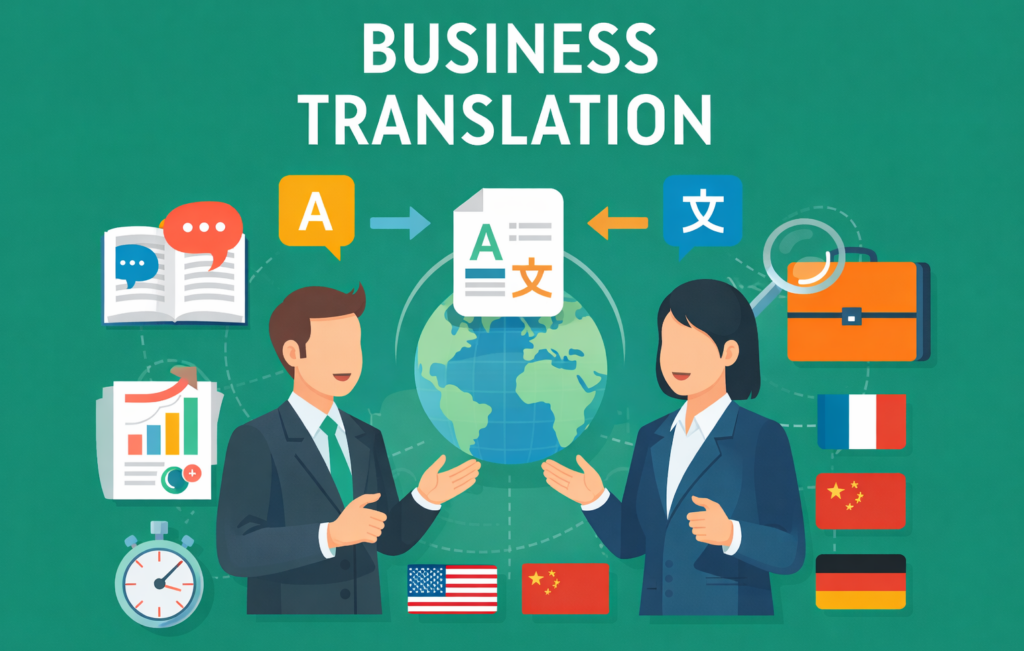
Expanding your business across borders opens the door to new opportunities, markets, and connections. However, the key to succeeding in international markets lies in effective communication. Without translating your business properly, the message you intend to convey might get lost in translation. That’s where global translation comes in.
In this guide, we’ll explore what business translation is, the different types of content that require specialized translation, and how you can effectively communicate with a global audience. Additionally, we’ll introduce you to Crowdin, a platform that helps you streamline the translation process, ensuring that your business is well-positioned to succeed in international markets.
What Is Business Translation?
At its core, translation for business involves adapting a company’s content, messaging, and brand identity to make it accessible, relevant, and culturally appropriate in a different language. This process is much more than simply converting words from one language to another. It requires contextual understanding, cultural adaptation, and careful consideration to maintain your brand’s voice and integrity while making sure that the message resonates with a new audience.
For example, let’s say you’re translating a catchy marketing tagline like “Think outside the box.” In English, this phrase is a clever way to express creativity and innovation. But when directly translated into another language, it may not make sense at all. The literal translation might confuse or even alienate your target market.
A high-quality business translation, however, will take the spirit of the message and find a culturally appropriate equivalent. It ensures that the creative ideas and emotions behind the words are preserved, giving your business a better chance to connect meaningfully with new customers.
Why Business Translation Is Crucial for Global Success
When expanding into new markets, ensuring clear and accurate communication becomes even more important. Here’s why:
Establishing Trust in New Markets
For customers to trust your brand, they need to feel that your company understands their language, culture, and expectations. Translation for business ensures that your content is not just linguistically accurate but also culturally relevant. This builds confidence in your brand, making potential customers more likely to engage and make purchases.
Improving User Experience
Whether it’s a website, app, or product manual, localized content enhances user experience by making it feel native to the target audience. Translating not just words, but also the entire experience (e.g., date formats, currency symbols, navigation layouts) leads to a smoother interaction with your product or service, resulting in higher customer satisfaction.
Expanding Market Reach
The global marketplace is vast, and each country or region may have different language preferences and cultural nuances. Effective translation allows you to reach a wider audience, making your brand more accessible and appealing to customers across different regions.
Different Types of Business Translation
1. Marketing Translation & Transcreation
Marketing content often requires transcreation, which goes beyond direct translation to adapt creative messaging for new audiences. This process involves capturing the tone, cultural nuances, and emotional appeal of the original content. For example, a clever tagline or social media campaign might require complete reworking in the target language to maintain its impact. Transcreation ensures that marketing materials are just as effective, engaging, and persuasive in foreign markets as they are at home.
2. Technical Translation
Technical translation requires precision and accuracy. This includes translating user manuals, product specifications, safety instructions, patents, and more. A small mistake or inaccurate translation in these documents can lead to misunderstandings, compliance issues, or even dangerous consequences. Therefore, technical translations require expert linguists familiar with both the language and the specific technical domain.
3. Legal Translation
Legal translation is crucial for translating documents like contracts, terms of service, privacy policies, and regulatory paperwork. Legal language is highly specialized, and even a small error can have serious legal consequences. Thus, legal translations demand translators with deep knowledge of the legal systems in both the source and target languages. Accuracy and attention to detail are paramount.
4. Online Business Translation
A large portion of modern translation focuses on digital presence, such as websites, apps, and software interfaces. This type of translation not only involves translating text but also adapting the user interface (UI) and user experience (UX) to local preferences. This could include adjusting layouts, buttons, colors, or even how dates and currencies are presented to make sure your website or application feels local and familiar to international users.
The Role of AI in Business Translation
AI Translation: A Good Start, But Not the Whole Story
In the fast-paced world of global business, AI-powered translation tools like Google Translate or DeepL offer quick and cost-effective solutions for initial translations. These tools work by analyzing massive amounts of data to provide instant translations of text. However, AI translation alone is not enough to fully address the nuances of global translation.
While AI can handle basic translations and help with large volumes of content, it still lacks the ability to grasp cultural context, emotional undertones, and the brand voice that are crucial in business communication. Therefore, while AI is valuable for drafts or simple content, it should be used in tandem with human expertise to ensure the translation is accurate and culturally appropriate.
Recent advancements, such as Crowdin’s integration with AI tools, show that AI-assisted translation can improve quality when combined with context and human review, delivering more precise and localized results.
Effective Global Translation: Tips for Success
1. Start Small and Scale Gradually
If you’re just starting with translation, there’s no need to translate everything at once. Focus on the most critical content that will have the biggest impact, such as your website’s core pages or top-selling product descriptions. Once you gain experience in those markets, you can expand further.
2. Work with Professional Translators
While DIY tools like Google Translate can give you a rough idea, for business-critical content, always rely on professional localization experts who understand both the language and the culture of your target audience. Consider partnering with a localization agency that offers cultural consulting and project management.
3. Choose the Right Translation Management Software
Using a localization management platform (LMP) like Crowdin can help centralize your content, track progress, and ensure consistency. Crowdin offers tools that combine machine translation with human review, helping streamline the process while ensuring quality.
4. Incorporate Feedback from Local Audiences
Once your content is localized, actively gather feedback from local users to ensure the translation resonates with them. This can involve customer reviews, surveys, or user testing to ensure that your message is being received as intended.
Frequently Asked Questions About Business Translation
What Is Business Translation?
Business translation is the process of adapting your company’s content and messaging to be understood by a global audience. It involves translating text, but also ensures cultural relevance, local preferences, and brand identity are maintained.
Why Is Business Translation Important?
Business translation helps your company enter new markets, build trust with international customers, and ensure consistency across various regions. It ensures your content resonates with local audiences while keeping your brand identity intact.
What Types of Content Require Business Translation?
Key content types that often require translation include marketing materials, technical documents, legal contracts, product descriptions, and websites. Each type has unique requirements and needs a tailored approach.
Final Thoughts
As you expand your business into new markets, business translation becomes a fundamental part of your growth strategy. It’s about more than just translating words – it’s about ensuring that your brand message, tone, and values are conveyed in a way that resonates with diverse audiences.
With the help of professional translators, AI tools, and platforms like Crowdin, you can streamline the translation process and enter international markets with confidence. Start small, focus on quality, and use the right resources to ensure your business is ready to thrive globally.